Materials & Craft
Reading the Weave: A Guide to Coyuchi Organic Cotton Bedding
A bedding label is a small map of a much larger journey. Fiber origin, weaving, construction, certification, and care all shape what cotton feels like—and how it lives in a bedroom over time.
Published October 21, 2026
At first glance, cotton bedding can seem like a simple choice between crisp and soft, smooth and textured. But a finished sheet or duvet cover is the outcome of many decisions, beginning in a field and continuing through spinning, weaving, finishing, sewing, and washing. The words on a product description—organic cotton, percale, textured weave, GOTS certified—offer clues about those steps. Read together, they make it easier to compare materials without assuming that one label can tell the whole story.
Coyuchi bedding provides useful examples of how those clues appear in practice. A product may identify where its cotton was grown and where the fabric was woven, name a construction such as plain-weave percale, and describe practical details like internal ties or an envelope closure. Those details do not promise that every person will experience a textile in the same way. They do give readers a more grounded basis for asking what a fabric is made of, how it may behave, and what care it requires.
This guide follows the fabric from fiber to finished bed covering. Along the way, it distinguishes weave from fiber, explains what certification can and cannot establish, and offers a method for weighing tactile preferences against everyday upkeep.
Start with the fiber, not the adjective
Cotton begins as a plant fiber surrounding the seeds of the cotton plant. Once harvested and processed, fibers are spun into yarn; yarns are then interlaced to make cloth. The length, strength, and preparation of fibers can influence the yarn and fabric, but finished comfort depends on much more than the raw material. Thread construction, weave, density, finishing, and laundering all matter.
When a bedding description says “100% organic cotton,” it identifies the material and makes a claim about how the cotton was produced under the applicable organic standard. It does not, by itself, specify whether the fabric will feel crisp, silky, heavy, or airy. Those sensations are more directly connected to the yarn, weave, finishing, and the individual’s own preferences.
Origin information adds another layer. For example, the Toro Canyon Organic Duvet Cover is described as using GOTS-certified organic cotton grown in India and woven in Portugal. That statement distinguishes the location of fiber cultivation from the location of textile production. It is a useful piece of context, though it is not a complete account of every stage in a supply chain. Readers comparing bedding can look for similarly specific descriptions and note where information is present, absent, or expressed in broad terms.
“Made in” and “grown in” answer different questions. Cotton may travel from its growing region to a mill elsewhere, where it is spun, woven, dyed, finished, or sewn. A precise product description can help clarify some of these transitions. It should not be read as a full environmental assessment: that would require more information about farming practices, energy, water, chemical management, transport, labor conditions, and product lifespan.
The crossing threads: how weave changes the surface
Weave describes the arrangement of lengthwise warp yarns and crosswise weft yarns. Their pattern determines much of a fabric’s structure and visible character. Two textiles made from cotton can feel markedly different because their yarns are organized differently, and because finishing changes the surface after the cloth comes off the loom.
Plain weave and percale
In a plain weave, each weft yarn passes over one warp yarn and under the next, repeating a simple, balanced pattern. The structure is familiar in many everyday fabrics. Percale is commonly used to describe a closely woven plain-weave cotton fabric with a matte appearance and a crisp hand. People often associate it with a cool, clean feel, though actual sensation varies with yarn, finishing, room temperature, and personal preference.
A plain weave percale underside appears in descriptions of both the Toro Canyon duvet cover and its coordinating sham. In the duvet cover, the percale underside is described as contributing a crisp, clean feel, while the overall cover is characterized as midweight and breathable. Such language is best understood as a description of intended character, not a guarantee of a particular sensation for every sleeper.
Percale’s relatively straightforward structure may appeal to people who like a more matte surface and a fabric that feels less slick than sateen. It can also crease; that is a normal feature of cotton, not necessarily a sign of poor quality. Washing and drying practices, along with the fabric’s finish and yarn, influence how much wrinkling appears.
Textured constructions
Textured weaves introduce visible and tactile variation through the arrangement of yarns. Depending on the design, a surface may feel more dimensional than a flat plain weave and may catch light unevenly, producing subtle shifts in appearance. In the Toro Canyon collection, product descriptions explain that weft yarns move through the warp to create a textured hand-feel. The design is described as drawing inspiration from rock formations and mid-century textile work; the practical point for a comparison is that texture is part of the fabric’s construction, rather than simply a printed pattern.
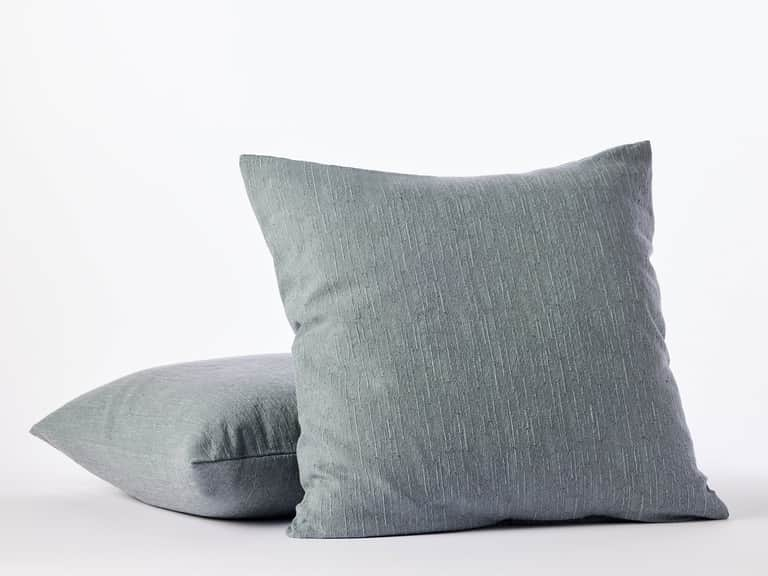
The Toro Canyon Organic Sham pairs a textured woven front with a plain-weave percale underside. That contrast makes the piece a concise lesson in reading product details: a single item can combine more than one surface construction. The front supplies visual and tactile interest, while the backing offers a different, smoother character. An envelope closure at the back is another construction detail, affecting how the sham opens and how its pillow is held in place.
Textured cloth may be an appealing choice when a bed needs depth without a strong print or bright color. It can also make a small area of fabric feel more visually active. Whether that texture feels pleasant against the skin is personal; people who prefer a uniformly smooth surface may want to consider the placement of the textured face and how the bedding will be used.
Matelassé and dimensional cloth
Matelassé is a woven construction associated with a raised, quilt-like appearance. The surface has dimension, but the effect is created through textile structure rather than necessarily through a separate layer of padding. A matelassé coverlet can add a softly textured layer to a bed without the loft of a thick comforter. When comparing products, check whether the description identifies the fiber, the weave, the finishing treatment, and the intended role of the piece.
Weave names are helpful, but they are not complete performance ratings. A label cannot tell you exactly how warm a room will feel, how quickly a specific textile will dry in your home, or how it will soften after repeated laundering. Construction gives a useful starting point; lived experience fills in the rest.
Finish: the final influence on hand and appearance
After weaving, cotton fabric may be washed or treated to develop a particular surface and drape. Finishing can influence softness, texture, color, and the way a cloth settles. A stonewashed finish, for instance, is described on the Cascade Organic Matelassé Coverlet as creating a soft, plush hand. That is useful information when comparing it with a crisper percale or a smoother plain weave.
Finishing terms should be read as part of the full specification. “Soft” is a subjective description, while “stonewashed” names a process category. Neither term alone reveals every detail of production or predicts exactly how the fabric will feel after years of use. A newly finished textile may also change with washing: some fabrics relax, some become softer, and some show wrinkles more prominently as they age.
Think of finish as one layer in a sequence. Fiber becomes yarn; yarn becomes woven cloth; finishing modifies the cloth; sewing turns it into a duvet cover, sham, or coverlet. Each stage contributes to the final object. No single attribute—not organic status, thread count, or a particular weave—can stand in for all the others.
What certification tells you
Certifications can make product claims easier to evaluate, especially when a standard covers defined requirements and the certification applies to the product or supply-chain stages in question. GOTS, the Global Organic Textile Standard, is a widely recognized standard for organic textiles. A GOTS claim is meaningful context for shoppers seeking information about organic fiber and textile processing requirements within the standard’s scope.
Certification is not a comfort rating. It does not determine whether a sleeper prefers percale to a textured construction, whether a duvet cover will feel cool in a particular climate, or whether a particular weight suits a household’s habits. Nor should a certification label be treated as a complete environmental score for a product’s whole life cycle. It is one piece of evidence among several.
When reviewing a claim, ask what the certification refers to, whether it is clearly identified, and whether the product details provide supporting context. A product page that names the fiber, places of origin and weaving, and relevant construction details gives readers more to work with than a bare adjective. If a question remains—such as the scope of a certification or the meaning of a particular claim—consult the certifier’s published information rather than relying on assumptions.
Organic describes a production standard for fiber; it does not automatically mean that a textile is more durable, softer, or easier to care for than every conventional alternative. Those qualities depend on the fabric and its use. A careful comparison treats certification as a reason to look more closely, not as a substitute for looking at all.
Construction details matter at home
Small sewing details become practical features once bedding is used and washed. Duvet ties help connect the cover to an insert, reducing the chance that the filling will bunch in one corner. The Toro Canyon Organic Duvet Cover lists internal ties and coconut shell buttons. These features describe how the cover closes and how the insert is secured; they also give a shopper a clearer picture of the object than a fabric description alone.
A sham’s closure affects how easily a pillow can be inserted and removed. An envelope closure uses overlapping fabric at the back rather than a prominent opening on the front. A backed sham may combine different weaves on its two sides, as the Toro Canyon sham does. For a coverlet, edge finishing can influence how a piece lies and how its outline appears when layered over a sheet or duvet.
Product measurements and included-piece details are equally important. A sham may be sold individually, while a duvet cover is a separate textile intended to enclose an insert. Confirming what is included avoids confusing a styled bedding arrangement with the contents of a purchase. Dimensions also help assess coverage: a generously sized coverlet may fold over a mattress more deeply than a shorter layer, but the result depends on mattress height and bed size.
These are not merely decorative distinctions. Closures, seams, ties, and hems face repeated handling and laundering. A clean construction description helps readers imagine how the piece will function and where it may need attention during care.
Care is part of material choice
A textile’s useful life is shaped not only by how it is made but by how it is maintained. Care instructions are therefore part of the material story. The Toro Canyon Organic Sham is described with a cold, gentle wash using like colors, low tumble drying, and prompt removal from the dryer. The duvet cover’s description also emphasizes simple care. These directions are product-specific; the sewn-in care label should remain the final reference for a particular item.
Gentler washing can reduce unnecessary stress on fibers and seams. Avoid overloading a machine, which may prevent bedding from moving freely through water and rinse cycles. Washing with similar colors helps limit transfer, while removing cotton items promptly from the dryer may reduce deep creases. If ironing is allowed and desired, use the temperature guidance on the care label. Bleach and strong treatments should not be assumed safe just because a fabric is cotton.
Drying conditions vary from home to home. A large duvet cover can retain moisture in folds, so it may need enough room to tumble and dry evenly. Air-drying can reduce dryer use, but direct sun and local humidity affect both drying time and color exposure. The best routine is one that follows the manufacturer’s care guidance and works reliably in the conditions where the bedding is used.
Care also includes rotation and storage. Alternating sets gives each textile time between uses and washes. Bedding should be stored clean and fully dry, in a place where it is protected from persistent dampness. These habits do not make a textile indestructible; they can help prevent avoidable wear and keep it ready for regular use.
A practical way to compare bedding
When several options look similar online, use a short sequence of questions. It can turn a stream of marketing language into a more useful comparison:
- What is the fiber? Check the stated composition and whether the description identifies organic cotton or a blend.
- Where did the fiber grow, and where was the cloth made? Treat these as separate stages and look for specific information.
- What is the weave or construction? Distinguish plain-weave percale, textured cloth, matelassé, and other named structures.
- What does the finish contribute? Look for details about washing, stonewashing, or other treatments, while remembering that hand-feel remains subjective.
- What certification is stated? Identify the standard and consider what it covers, without expecting it to answer every question about comfort or impact.
- How is the item built? Note closures, backing, ties, hems, and whether the product is sold individually or as a set.
- Can you live with its care routine? Compare wash temperature, drying guidance, and ironing requirements with your household habits.
This approach is more dependable than choosing by thread count alone. Thread count measures the number of threads in a specified area according to a manufacturer’s method, but it cannot independently describe fiber quality, yarn structure, weave, finishing, or personal comfort. A high number is not a universal guarantee of superior bedding. Read it alongside the rest of the construction information.
A bed is a system of layers
Bedding performs as a group of materials, not as isolated objects. Sheets touch the body; a duvet cover encloses an insert; shams and pillowcases frame pillows; a coverlet adds a lighter layer. The interaction between these pieces affects warmth, texture, and the visual rhythm of the bed. A crisp percale underside can sit beside a more dimensional woven face, while a matelassé coverlet introduces a raised surface over a smoother sheet.
Layering offers flexibility across seasons and household preferences. Instead of relying on one heavy textile for every condition, a sleeper may adjust the combination of sheet, cover, and light blanket. A coverlet can serve as an additional layer or as a bed covering in its own right when temperatures permit. The most useful arrangement is one that can be washed and managed without becoming a burden.
Texture can also be distributed deliberately. A richly textured duvet may not need multiple heavily textured shams; a quieter base fabric can give the eye a place to rest. This is a design question, but it begins with understanding the materials. A bedroom’s visual calm often comes from differences in surface and weight that are subtle rather than identical.
Reading beyond the label
Product descriptions provide a starting point, not a complete field report. They can identify fiber, origin, weave, certification, and care, but they may not answer every question about a textile’s full environmental footprint or long-term performance. Consumers can use the stated details to frame further questions: Is the certification explained? Are the stages of production clearly distinguished? Does the care guidance fit the way the household washes bedding? Are replacement parts or matching pieces available if one item wears out?
Where independent information is available, it can help clarify the meaning of certification and production claims. Reliable sources include the certifier’s own standard documents, textile museums and educational institutions, and material-science references that explain fibers and fabric construction. Avoid treating a single marketing phrase as proof of a broad claim. Specific, checkable details are more useful than sweeping assurances.
Choosing organic cotton bedding is ultimately a combination of values and practical judgment. Fiber standards may matter to one shopper; feel, temperature, durability, price, or laundry requirements may be decisive for another. A thoughtful choice does not require every person to prioritize the same feature. It requires knowing what each feature can—and cannot—tell you.
The quiet information in a piece of cloth
A duvet cover may appear plain from across a room, yet its surface holds a record of decisions: cotton cultivated in one region, yarn prepared and woven in another, a construction chosen for a certain texture, and seams and closures designed for repeated use. Reading that record can make bedding feel less like a mystery and more like a material object with identifiable qualities.
For Coyuchi organic cotton bedding, details such as Indian-grown cotton, weaving in Portugal, GOTS certification, a percale underside, textured fronts, coconut shell buttons, and internal ties give a concrete vocabulary for comparison. They do not settle the question of what will feel best against a particular person’s skin. They help narrow the distance between a product description and the experience of living with the textile.
In the end, the most useful label is the one you know how to read. Fiber tells you what the material is. Weave explains how yarns are organized. Finish describes how the surface has been treated. Construction shows how the piece is assembled, and care instructions reveal what ownership asks of you. Taken together, these clues turn a bedding decision into an informed choice—one made not just for the first night, but for the many washes and seasons that follow.